Showing posts with label Brittany. Show all posts

Monday, 24 August 2026

The Bridge and the Dolmen

I pondered that question readers and interviewers love to hurl at authors earlier this month. You know the one I mean, don't you?

Where does your inspiration come from?

I long found it so hard to answer, and since it seems to be the bait favoured by scammers nowadays, I've become wary of it. It is, however, an interesting question, and one I think all writers, musicians, and artists of any ilk ought to reflect upon. This morning, I decided to start my day off from the day job as a heritage tour guide (guide-conférencier) by visiting a couple of the numerous remarkable sites in my neck of the woods here in the Brière, southern Brittany. In other words, the tour guide gave himself a guided tour. After all, why not?

The first site was one I already knew, and which I drive past regularly on my way to the quaint village of Kerhinet, but today was the first time in years I actually stopped to pay it the homage it deserves. The Kerbourg Dolmen is one of the best-preserved examples of Neolithic architecture in the Brière Regional Natural Park. This impressive corridor dolmen, or passage grave, is capped by four large "table stones" (which is the literal translation of the Breton word taol-vaen, which gives us dolmen, the word we typically use to refer to the structure as a whole) and is almost eight metres long. William Collings Lukis, an English archaeologist, conducted a dig here in 1879 and two polished stone axes discovered are displayed at the British Museum. There are in fact two dolmens at Kerbourg, but the second one remains collapsed. Legend has it a fifty-metre underground passage used by korrigans (the pixies or brownies of Breton folklore) connects the two dolmens. I found no trace of it...


The influence the folklore, landscape, and heritage of Brittany has on my fiction can't be overstated, and the inspiration (or awen, as I prefer to call it) with which this ancient land feeds my imagination is nowhere more apparent than in Dead on the Dolmen, my mystery novel featuring Oscar Tremont, Investigator of the Strange and Inexplicable. 

I followed up my pilgrimage to Kerbourg with a visit to an ancient bridge I had been meaning to cross ever since hearing about its existence several years ago. The Gras Bridge, which is technically a ford, dates from the 1st century and was restored in 2014. It is a stone walkway for most of its length and spans the river Mès in the middle. Along the banks of the Mès reeds sway in the wind, and it is this plant that is used to thatch the roofs of the traditional cottages (including mine) here in the Brière.

I'm sure you can appreciate that I no longer have any doubts about how to answer The Question. Awen is all around me, in the stones, the soil, the wind, the water, the reeds, and the trees, and it has been there all along.


Monday, 3 August 2026

Inspiration is a Lighthouse

"Where does your inspiration come from?"
That's a question writers are constantly asked, and it's one we really can't answer. At least, that's how I feel. The word "'inspiration" (or "awen", its Celtic equivalent) means to breathe into something, but where does that breath come from? Unless he's intentionally copying another creator's work, no writer can simply point to where inspiration comes from. That said, every now and then, we catch a glimpse of what drives our creativity; we gain some insight into the workings of our own minds. That happened to me this weekend, while visiting friends in Finistère, Brittany.

After a wonderful evening out and a good night's sleep in the port of Lesconil, I took my family to the Eckmühl Lighthouse in Penmarc'h on Sunday morning. I don't yet know how climbing this sixty-five-metre tower built at the end of nineteenth century will inspire me and find its way into one of my stories, but I know that it will. I felt it before I started climbing the two hundred and fifty steps to the top. That, my dear readers, is perhaps the closest I can come to telling you where my awen comes from. 
The Phare d'Eckmühl is an active lighthouse in Penmarc'h, Finistère department, Brittany, France. At a height of 213 feet (65 m) it is one of the tallest lighthouses in the world. The tower was built following a decision on April 3, 1882 to modernize the coastal lighthouses and raise the focal height of the Penmarc'h lighthouse, built in 1835, to 60m. However, engineers reported that the old tower could not support such an extension, so in 1890 it was decided to build a new lighthouse, the plans of which were completed on April 3, 1882. Funding came unexpectedly on 9 December 1892 when Adélaïde-Louise Davout, Marquise de Blocqueville, left substantial funds for the new tower in her will, provided the lighthouse was dedicated to the memory of her father, a marshal of the First French Empire Louis Nicolas Davout, who was "Prince d'Eckmühl", a title he won after the Battle of Eckmühl. The tower was inaugurated on October 17, 1897.

The people you meet, the places you go, an unexpected moment in time... This is where our inspiration comes from. This is what feeds our fire. And a good keeper doesn't let the fire go out! 


Monday, 19 January 2026

Scenic Jog Along The Wild Coast

Those of you who follow me on TikTok will have already enjoyed (and perhaps laughed at) my "Running is Writing" clips. It's true though, at least for me. Running gets the blood pumping and the ideas flowing, and when you live in Brittany and set most of your stories in this mystical land, there's no better way to really soak up the atmosphere like ink before bringing it to life again on the page.

Here are a few shots I took while jogging along the Wild Coast (la Côte Sauvage) in southern Brittany. An excuse to catch my breath perhaps. Mud, granite, sand, and sea... Moss, lichen, gorse, and reed... and a rainbow as a reward at the end. There are benches along the coast here that are perfect for reading a good book, or for doing push-ups without getting your hands muddy. The bench in the shot I turned into a meme even faces a rock formation called The Devil's Table. You can't get better than that! 

Three of my stories I've set along the coast of Brittany are:

The Curse of the Emerald Eye (The Black Beacon Book of Pirates)

Holiday Home (The Black Beacon Book of Horror)

The Painting and the Password (The Third Black Beacon Book of Mystery)

The Impossible Theft (The Second Black Book of Mystery)

Of course, my forthcoming novel is set just a little further inland, in the marshland I call my home. Don't forget to grab a copy once it's out on the 30th of January. Dead on the Dolmen is the first novel featuring Oscar Tremont, Investigator of the Strange and Inexplicable, and if you love atmospheric settings, quirky characters, and a clever puzzle even half as much as I do, this distinctly Breton mystery is going to have you enthralled.   


Sunday, 2 November 2025

The End of a Chapter: My Last Day at La Porte Saint-Michel

I said goodbye to La Porte Saint-Michel (Saint Michael's Gatehouse) in Guérande last Friday the 31st of October; Halloween 2025. After working as a tour guide in the salt marshes over the last five years and with guided tours of the gatehouse to one of Brittany's few remaining mediaeval towns with unbroken ramparts added to my repertoire this year, I'm now ready to start a new chapter in my professional life. Over the winter, I'll be both looking for new contracts (and contacts) and working on finding my own clients, particularly English-speaking visitors.

One of the first major steps for any freelance guide, of course, is setting up an attractive website. It will take time to build it, but the foundations have already been laid: https://brittanytourguide.com

Friday morning, I took a number of short videos of my last steps along the walls of Guérande and I'm posting them on my TikTok profile over the coming days: https://www.tiktok.com/@camerontrost_author

Here's one of these videos of the chapter that has come to a close.


Wednesday, 25 January 2023

From the State of Queensland to the Duchy of Brittany

One question I'm often asked (obviously by readers who haven't read my work yet) is whether I prefer to set my stories in places I know or in places I've never set foot. It's an interesting question, and one that deserves a full answer...so here goes.

As an Australian now living in Brittany, I find myself setting most of my fiction these day - almost instinctively - around my new home. That's quite a dramatic change considering the differences between the state of Queensland and the ancient Duchy of Brittany. The move from my home in Brisbane to my wife's in Brittany was made for a number of reasons, and none of them have anything to do with my writing, not directly in any case. Nonetheless, Brittany leaves an indelible mark on my writing, and I like to think that one day, my writing will leave its mark on Brittany. Within easy walking distance of my village, there are marshes, a mediaeval mound once used as a lookout, and an abandoned windmill. A short drive away, you'll find dolmens, the ruins of a castle, a sea cave inhabited by a korrigan, and German bunkers built during WWII...to see all this, find me on Instagram! There are misty mornings over the marshland here and stormy nights with waves crashing against the granite coast. You'll not be surprised to know all this provides endless inspiration (or awen to stick with the Celtic theme) for a writer of mystery, suspense, and horror. Added to this is the fact that for me as a writer, it's important to actually go and sit in the place a story is set, at least very now and then. One of my unpublished short mysteries featuring Oscar Tremont is set in a nearby river port (La Roche-Bernard) and the picturesque setting plays an important role in the plot.

So there you go. Not every story I'm working on and plan to write is set in Brittany, but most of them are, and when you read them you'll know there's nothing arbitrary about the setting. I'll be taking you on a guided tour of this ancient land, with its dramatic landscapes, its history, its legends, its superstitions, and you might even learn a word of two of its language too! Kenavo!

     The fortified city of Guérande (Gwenrann) in Brittany.


Sunday, 14 July 2019

Cairns and Castles

What do mystery writers do when they have free time and feel like going for a drive? They visit mysterious sites like neolithic cairns and mediaeval castles, naturally. There are dozens of stone-age remains and probably several dozen castles within an easy two-hour drive from where I live, so allow me to share a couple with you.

The Larcuste Cairns are hidden in the middle of farmland near Colpo in Brittany. They appear to be on private property, since you walk through cultivated fields to reach them, but are open to the public. I don't want to cause a stampede to this quiet village, but if you're of a considerate nature and keen on prehistory, a trip to the cairns is an interesting experience.


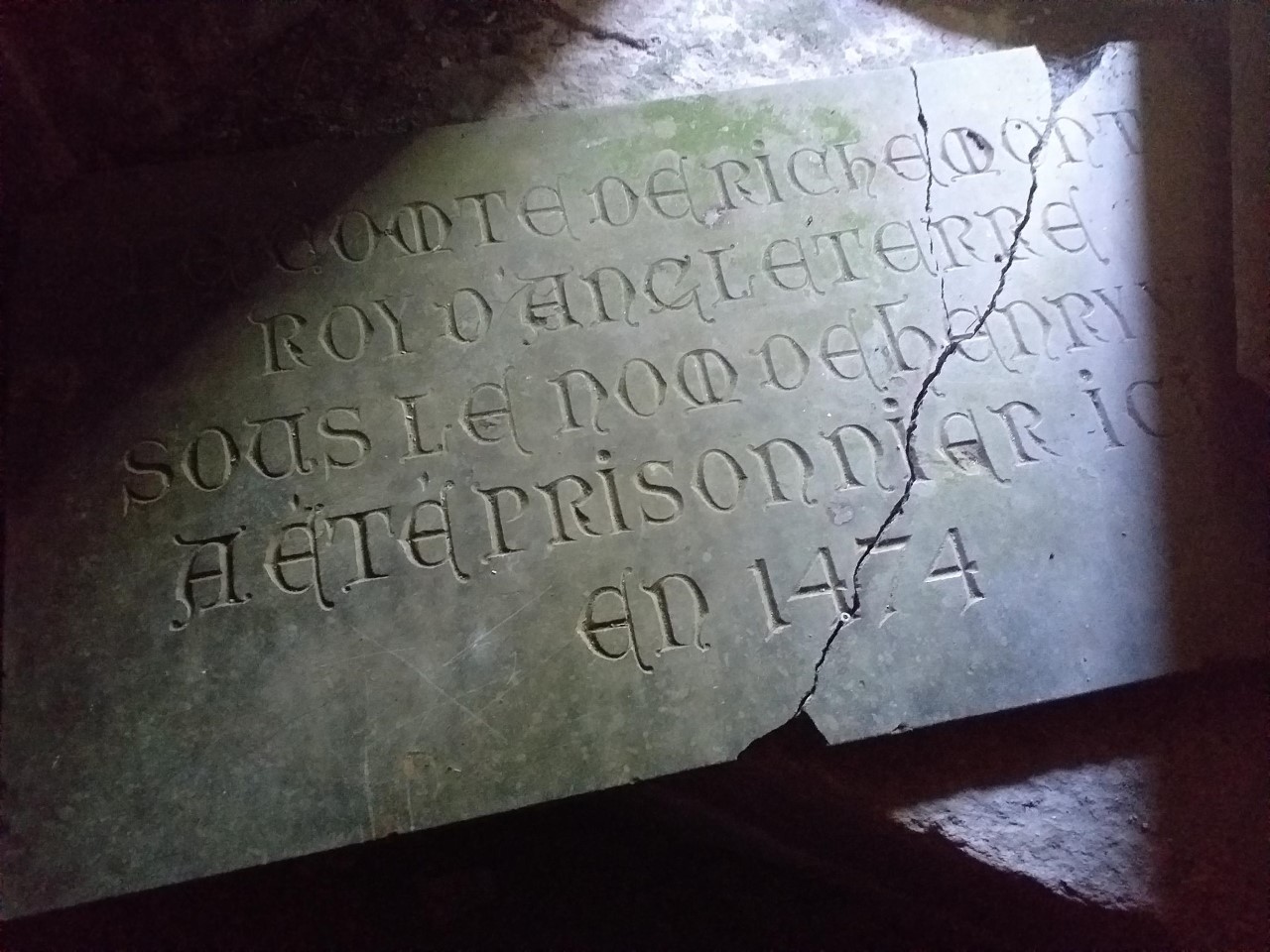
The Fortress of Largoet boasts one of the tallest keeps in the world at forty-five metres. It's an impressive hexagonal tower, now ruled by pigeons who bombard unsuspecting visitors with biological weapons as they step into the hollow stone shell that was once an abode of considerable standing. The castle was an important part of Brittany's defenses against France, and the future Henry VII of England, who would later found the Tudor dynasty, was imprisoned here for his own protection as a boy. As a result, he avoided assassination and is said to be the last monarch of any kingdom to speak Breton.


Inspiration for tales of mystery and suspense? You better believe it!


Friday, 2 November 2018

The Devil's Windmill

The Windmill Pact, my retelling of a Breton legend, is now available in Thuggish Itch: Devilish, accompanied by an unholy host of diabolic tales. You can find it on Amazon or on the Gypsum Sound Tales website.

More about Thuggish Itch: Devilish from the editor:

Devils, demons and the idea of Hell have always featured prominently in the horror stories that I found myself reading as a teenager or the films I still delve into on a rainy day. I’ve always found it quite amazing how differently the leading man, Satan, is portrayed depending on the creativity and beliefs of the creator. Thuggish Itch’s Devilish collection features, in no particular order, thirteen of our favourite tales, each of which provides a different take on the mythology, the red man himself and all of his minions.


Where is the Devil's Windmill?


The Devil's Windmill stands just outside the town of Guérande, which I refer to by its Breton name, Gwenrann, in my story. How much of the legend is true is up to you to decide. If you go there, chances are you won't meet the devil. The area is actually picturesque and the windmill is now part of a crêperie, so the only thing devilish ought to be the food and cider. 
Kalon Digor! Bon appétit!


Friday, 24 August 2018

A Day in Clisson

Living in France means there are plenty of charming historic towns to explore. As a writer of mystery and suspense, these towns often have what it takes to inspire a ripper of a tale. Clisson is one that I'd been intending to visit for quite some time, and it was as interesting as I'd hoped. There's the River  Sèvre which weaves its way through a lush, forested valley, and there's Italianate architecture thanks to François-Frédéric Lemot. There are a number of Italian restaurants in the old town, one of them proudly displaying Il Tricolore along with the Gwenn-ha-du (Italian and Breton flags), but I ate at Le Restaurant de la Vallée (pictured below), which offered views of the castle, and I didn't regret it. The service was impeccable and the dishes excellent, a fusion of local and oriental ingredients. The castle? I hear you ask. An impressive ruin, said to be haunted by Jeanne de Clisson "The Lioness of Brittany". After her husband was summarily executed by the French king, she became a pirate, and along with her sons sailed the Channel killing the crews of any French ships they encountered. One son, Guillaume, died after they found themselves shipwrecked and adrift, the other, Olivier, was brought up in the court of the English king. He began his military career with the English, allies of the Duchy of Brittany, and earned the nickname of The Butcher, but he later changed sides, despite having sworn to avenge his father's death, and joined the French, becoming the constable. In doing so, he became an enemy of the Breton duke. Turbulent times to say the least. I promise you, Clisson is a quiet town these days... well, except during Hellfest! Will I write a story set here? I really should! Don't you agree?