Showing posts with label interview. Show all posts

Thursday, 12 January 2023

Travel by Train and in Time: An Interview with Andrew M. Seddon

Andrew M. Seddon, one of the authors featured in The Haunted Train: Creepy Tales from the Railways, talks about unsettling experiences and writing.

What’s the most disturbing experience you’ve ever had in a train?

My wife and I were on the fast train from Paris to Calais, when there was an almost imperceptible bump, after which the train slowed and came to a complete stop.

Everyone wondered what was going on. It was a clear day. Was there an issue with the tracks ahead? Had there been an accident involving another train? Eventually, an announcement was made that we would be transported by bus the remainder of the way to Calais. Rumors circulated among the passengers, but the true reason finally emerged.

A man had been tied up and thrown from a bridge in front of the oncoming train. The bump had marked the end of his life.

We never learnt the identity of the victim or his murderer.

What’s the creepiest place you’ve ever been to?

Creepier than all the castles and ghost towns I have visited is the Old State Prison in Deer Lodge, Montana. Now a museum, the long, echoing hallways and the bare cells still seem to reverberate with the shouts and cries of the condemned. A place of violence and murder, anger and despair, those essences remained trapped within its bleak, unforgiving stone walls.

What scared you when you were a child?

My scariest memory is of feeling awake but paralyzed, sensing that a presence, unseen but evil, lurked nearby. Oh how I wished that I could move, and run to my parents’ room, but all I could do was lie there and pray and hope that eventually I might be able to move again.

My young mind had no explanation for these events, but now I know that they are called hypnagogic sleep paralysis and hallucinations. They are caused by issues with the reticular activating system, the part of the brain that controls wakefulness.

Describe your writing voice.

In my own ghost/weird/horror stories, I attempt to be unsettling and suggestive; not bringing the horror out into the open, but leaving it to the imagination.

What’s the best thing you’ve ever written?

I consider Ring of Time to be my best work. It is a mix of science fiction and historical fiction. Several centuries from now, Dr. Robert Cragg, a historian who has tragically lost his wife and child, volunteers to become the first time-travelling historian. Hoping to escape his grief, he accepts the mission to investigate people in ancient Rome – people that we in our time know to have existed, as archaeologists have unearthed their remains. While he cannot change what has already happened, he can influence it – and his life can be very much at risk as he has the unfortunate tendency to end up in dangerous situations. Instead of a dead past, he discovers that it is very much alive; and that he might even find love again.

What’s the scariest story you’ve written?

I think my scariest story would be ‘That Which Walks’ in my collection The Deadliest Sins. It is based on the ancient Babylonian myth of lamiae, brought into the present day.

What are you currently working on?

Current projects include a series of stories about a disillusioned British Army officer in the years following World War One. Accompanied by his faithful German shepherd Baltasar he encounters a series of supernatural events which will eventually prepare him to foil a Nazi plot in the next war. I’m also working on a series of reflections on running marathons, an anthology of wolf stories, and I really want to write a sequel to my SF novel Wreaths of Empire, if only I can put the parts into place…

ABOUT ANDREW M. SEDDON

Born in England – and still with a deep affection for his homeland - Andrew M. Seddon has lived most of his life in the USA, including thirty years in Montana. Between non-fiction articles on diverse subjects and short stories (including twenty anthology contributions) he has accumulated some two hundred publication credits. He has also published 15 books in the genres of science-, supernatural-, and historical fiction. He is not sure which genre he prefers – whichever one has a work in progress!

He is a member of SFWA and the Authors’ Guild, and when not writing he be found hiking, enjoying classical music, and running marathons. Now retired from the medical profession he lives in Florida with his wife Olivia and German Shepherds Rex and Baltasar, where he hopes to write even more.

www.andrewmseddon.com www.andrewmseddon.blogspot.com

ABOUT THE BOOK THE HAUNTED TRAIN: CREEPY TALES FROM THE RAILWAYS


Come on board for a Gothic journey in a funicular railway in Victorian England, a freight train in the Carpathian mountains, a high tech sky train in Bangkok, an underground railway in Tokyo. Visit stations which lure with the promise of safe shelter but harbour unexpected dangers. Meet the people who work on the tracks – stationmasters, porters, signal-men – and those who travel – commuters, tourists, dead bodies, murderers and ghosts. In this volume, editor Rayne Hall has collected twenty of the finest– and creepiest – railway tales. The book features the works of established writers, classic authors and fresh voices. Some stories are spooky, some downright scary, while others pose a puzzling mystery. Are you prepared to come on board this train? Already, the steam engine is huffing in impatience. Listen to the chuff-chuff-chuff from the locomotive and tarattata-tarattata of the giant wheels. Press your face against the dust-streaked window, inhale the smells of coal smoke and old textiles, watch the landscape whoosh past as you leave the familiar behind and journey into the unknown. But be careful: you can’t know the train’s real destination, nor your fellow travellers’ intentions. Once you’ve closed that door behind you and the wheels start rolling, you may not be able to get out.

The ebook is available for pre-order from Amazon at the special offer price of 99 cents until 31 January 2023. (After that date, the price will go up.) https://mybook.to/Train.

The paperback edition will be available soon. 

Wednesday, 4 January 2023

Author Interview: Anna Willett

Thanks for agreeing to answer a few questions, Anna Willett. I enjoyed your novel, The Newlywed, and have posted my review here and on Goodreads. I thought my readers might like to know more about you and your protagonist, Detective Veronika Pope.

First of all, tell us a little about yourself. Who is Anna Willett? The Newlyweds is set in Seabreak, an imaginary coastal town in Western Australia. Did you grow up somewhere similar?

I grew up in Perth, Western Australia, living mostly near the beach. At heart, I’m a family person, but I’m also a writer, a voracious reader, a film buff, a fashion enthusiast and an animal lover. I’m not a fan of small talk, but I’m very chatty and always up for a laugh.

Seabreak is a fictional town that’s based on a real place. There are a number of towns one to two hours north of Perth that have a similar vibe to Seabreak. I’ve visited most of them. One thing that strikes me about these towns is their coastal beauty and the wind. Everything happens against the backdrop of the constant sea breeze.

Who exactly is Detective Veronika Pope? Does the reader learn a little more about her with each novel?

Wrestling with the emotional aftermath of a violent incident, Detective Inspector Veronika Pope is a flawed, sensitive, and highly intelligent investigator. A student of human behaviour, Pope pays attention to detail and uses her uncanny ability to connect with a crime scene and the victim in order to solve the most heinous crimes.

She has experienced more than her share of horror and violence, yet it’s her humanity and empathy that allows her to go deeper when investigating.

Veronika is also balancing life as a lead detective and a single mother.

What do you need in your writing space to help you stay focused? Do you ever actually go to places that are like the setting of a particular scene you’re working on—the dunes, a seaside pub?

Over the last few years, I’ve taken to writing longhand, so a pen, notebook, and absolute silence are all I really need.

I find when I’m writing longhand, the ideas flow. I usually write about five hundred words in one sitting and then type them into my manuscript, adding more as I go.

I like to travel to each location and spend a few days soaking up the sights and taking photographs of things that inspire me. While some of the towns are fictional, they are always based on real places. There is such a vast array of landscapes in Western Australia, there’s always new settings to scout.

What books did you grow up reading?

I grew up reading everything I could get my hands on, starting as a seven-year-old with The Magic Faraway Tree by Enid Blyton. By the time I was fourteen, I was reading Carrie by Stephen King.

What book (or books) are you currently reading?

I love reading crime, thrillers and suspense. At the moment, I’m reading The Secrets She Keeps by Michael Robotham.

What’s the trickiest thing about writing characters of the opposite gender?

I enjoy creating flawed yet strong female main characters. But it’s also fun to write from a male perspective. When I first started writing, I found male characters a bit tricky, mostly because I had it in my head that as a woman, I wasn’t sure how to write in a masculine voice. I soon realised that people are people and male or female, we all have our individual hang ups and hopes. I just focus on making the character as real as possible regardless of gender. 

 Thanks for your time, Anna. Looking forward to embarking on more adventures with Detective Pope.


Tuesday, 27 December 2022

Dark Inside the Haunted Train: An Interview with Karen Heard

British short story author Karen Heard is one of the writers whose stories are featured in the soon-to-be-published anthology The Haunted Train: Creepy Tales from the Railways. Here she answers questions about childhood fears and writing inspiration.

Have you ever seen a ghost? Tell us about the experience.

I haven’t seen a ghost but quite often I dream that I meet people who in my waking life are now dead - and at the time don’t realise that I’m dreaming. Sometimes it’s nice as I get to tell people that I love them, and clear the air about things I’m sorry or angry about. At others I forget that they are dead and we still argue like we would in real life or I‘m trying to take the opportunity to save them from whatever killed them. When I wake up, I have the same mixed feelings you might have if visited unexpectedly by a ghost from your past.

What scared you when you were a child?

When I was a young child I found it really hard to sleep as I was convinced that when falling asleep I might never wake up. At the same time I believed there was a monster living under my bed that came out at midnight, stared closely at my face, and would murder me if it saw that I was still awake after the witching hour.

It’s no wonder I became a horror writer - yeah? I also remember telling myself stories in the dark cold room, to calm and distract myself from the fear and stop myself falling asleep.

After many many terrifying nights screwing my eyes shut, afraid of the monster but also afraid to let myself drift off into death, I realised that I couldn’t go on like this and had to work out whether my fears were true or not. I gathered up the courage to look under the bed.

I must have been very young, because I remember there was a child’s potty under the bed for night time use. I kneeled down, lifted up the blankets, and looked under my bed to prove to myself that nothing was there… But I was right - there was a monster under my bed! Staring at me inches from my face.

I can still vividly see how it looked… and in retrospect what I see is a, head-sized, giant, dead desiccated moth, leaning on one side with its dried out wings splayed out like a vintage aeroplane with a feral stare frozen on its skull. I think, after the first initial terror, and running from the room in horror, I worked out even at the time that it was a dead creature of some kind, but the fear of that first moment when I looked and realised that everything that I thought I must be imagining - it was all true - is probably where I get my love of both horror and irony.

When I wrote my story for this anthology, and realised it needed an extra element, apart from just the events on the train, to tie things together, I used this memory of that intense fear for when the protagonist looks to see what is inside their closet.

For your story ‘Out of Order’ in The Haunted Train, where did you get the inspiration?

I wanted to write a story where the protagonist's senses are restricted in some way, such as hearing noises on the other side of the door but not knowing exactly what is happening. I’m intrigued by the idea that suggestion can do a lot more than actually describing the events. The readers fill that space by imagining what they truly find frightened.

Describe your writing voice.

Psychological and gothic, balanced out with ironic humour.


ABOUT KAREN HEARD

Karen lives in London and writes short stories, plays, books and scripts. She works in digital marketing and content creation, and used to manage the website for Railway magazine. Some of her stories are collected in the book It’s Dark Inside


  ABOUT THE BOOK THE HAUNTED TRAIN: CREEPY TALES FROM THE RAILWAYS

Come on board for a Gothic journey in a funicular railway in Victorian England, a freight train in the Carpathian mountains, a high tech sky train in Bangkok, an underground railway in Tokyo. Visit stations which lure with the promise of safe shelter but harbour unexpected dangers. Meet the people who work on the tracks – stationmasters, porters, signal-men – and those who travel – commuters, tourists, dead bodies, murderers and ghosts. In this volume, editor Rayne Hall has collected twenty of the finest– and creepiest – railway tales. The book features the works of established writers, classic authors and fresh voices. Some stories are spooky, some downright scary, while others pose a puzzling mystery. Are you prepared to come on board this train? Already, the steam engine is huffing in impatience. Listen to the chuff-chuff-chuff from the locomotive and tarattata-tarattata of the giant wheels. Press your face against the dust-streaked window, inhale the smells of coal smoke and old textiles, watch the landscape whoosh past as you leave the familiar behind and journey into the unknown. But be careful: you can’t know the train’s real destination, nor your fellow travellers’ intentions. Once you’ve closed that door behind you and the wheels start rolling, you may not be able to get out.

The ebook is available for pre-order from Amazon at the special offer price of 99 cents until 31 January 2023. (After that date, the price will go up.) https://mybook.to/Train

The paperback edition will be available soon.

Sunday, 23 October 2022

An Interview with Kyla Lee Ward, Australia's Queen of Weird

Kyla Lee Ward is Australia's queen of the weird and macabre, and her début collection of fiction has just been published by Independent Legions Press. To celebrate the release of This Attraction Now Open Till Late, we've asked her to answer a few (hopefully) original and meaningful questions. Are you ready for her answers? Relax...and try to ignore that shadowy form looking over your shoulder.


Hi Kyla, Congratulations on the publication of your first fiction collection, This Attraction Now Open Till Late, and thanks for answering these interview questions, giving my readers insight into your inspiration and creative process.

What immediately strikes the reader is the importance of setting in this collection and the way you shape the physical world into a character in many instances. Within the first four tales, we travel from Venice to New Zealand and from Kazakhstan to Japan. The reader sinks down into still waters or is lost in the bowels of the earth. The fabric between the physical and metaphysical is rent in places. Where does this fascination with the setting and environment come from?

Thank you, Cameron, for asking them! You have certainly made me think.

It’s as you say—the environment or setting is a character, more obviously in “And In Her Eyes The City Drowned” and “The Beautiful House”, but always a presence. The interaction of the protagonist with this presence forms the story, especially in this collection. The protagonist is always intruding upon, challenging, or sometimes courting, the genius loci and its defenders.

I have visited Venice and Prague, which are both like being drenched with a bucket of ice-cold history mingled with a strong euphoric. Likewise, New Zealand’s Waimangu Valley is like nowhere else on earth. I suspect that the stories I derived from each location could take place nowhere else. This is, of course, a highly privileged perspective, but I think that in certain circumstances, you can get away without physically being somewhere. When an image or report of some historical event strikes a chord, when you respond that deeply to a piece of music or an artwork, then that is where the story comes from. And it is always possible to experience your own city with this kind of depth and sense of surprise—in many ways, facilitating this is a writer’s job!

I keep mentioning history because I find that is the key. To write a place, you have to know what happened in a particular spot, how the stones were raised (volcanically, in the case of Waimangu). But there’s a perceptual exercise I’m fond of, in Christopher Penczak’s City Magick (Weiser Books, 2001). He calls it “sidewalking”, a procedure to slide your perceptions sideways and view your surroundings with fresh eyes. 

Your fiction brings all the senses into play, including the world of sound. One of my favourite songs, “Other Voices” by The Cure, came to mind as I read “And In Her Eyes The City Drowned”. How does music play a role in your writing, and what significance do you place on voice? 

You are kind to say so. And Faith is an underrated album.

Voice is essential! I frequently write in the first person, which is perhaps unfashionable but probably inevitable with my theatrical background—I’m used to monologues! In pieces like “A Whisper from the Death Pit” and “A Nightmare in Burgundy”, it is obvious how much the narrator’s voice shapes the story they tell you. But even in third person, so much of the characters and how they relate to their situation is established by a subtle voice. I think now of Mark in “Should Fire Remember the Fuel?”—how he distinguishes himself from his companions by observing them and reflecting on his choice of words.

I think good prose retains a musicality—most people understand what you mean if you say that poetry needs to be musical, but it is desirable in prose as well. Rhythm, harmony, the repetition of theme—there are definite parallels between writing and music! But as you say, all the senses are powerful tools. Just the right detail, appealing to sight, taste, scent or touch—can bring the whole piece alive for the reader. 

Folklore, arcana, archaeology, religion, and alchemy feature heavily in this collection. How did your love of all things forgotten or unknown blossom? Is forbidden knowledge and lost ritual to be feared or is it an integral part of humanity? Does it have a place in today's world?

(hums) “These are a few of my favourite things”

That I’ve already mentioned Penczak may serve as a warning - here we get a little weird. Without trying to set myself up as any kind of authority or claim anything particular in the way of ability, yes, I do seek knowledge and I do have a magical practice based in energy work—I utilise ritual. To me it is integral, but many people do fear it, even when or perhaps because they have no experience or interest in that area themselves. I sometimes think the only “forbidden” knowledge you can possess is something, anything, that your interlocutor does not. My experience with such people is probably why, in my fictional work, seekers after knowledge don’t tend to meet the dreadful fates they do in more conservative horror. So long as they are respectful and honest about their intent, their fates may be dreadful but also fulfilling, liberating, or perversely enjoyable.

It's always seemed obvious to me that the world is much, much larger and stranger than it’s supposed to be. I suspect all writers feel this to an extent, otherwise why try and set your observations down? Folklore, arcana, religion and etc. are all attempts to tackle this vast strangeness one way or another and I have made study of all of them, in varying degrees. A quiet child with a reading age far beyond that of her peers can explore many things—just don’t ask your mother what a concubine is.

Your work will remind readers of weird and strange fiction classics like Robert Aickman, Algernon Blackwood, and Joan Aiken. Which writers do you feel a spiritual bond with, and who are some of your favourite contemporaries? 

Blackwood and Aiken! Now you’re just flattering me! And I love Aickman’s "Pages from a Young Girl's Journal"—I read it young and it lodged in my mind thereafter.

As for my own favourites, there are two Lees involved—Vernon and Tanith. And this is more than a little weird, because although our shared name may have caught my attention initially, that doesn’t explain why the work of these two ladies resonates so deeply with me. 

Vernon Lee was the pen name of Violet Paget, under which she published in the Decadent journal The Yellow Book. Works such as “Amore Dure” and “A Wicked Voice” are breathtakingly atmospheric, conveying a palpable sense of operations beyond the mundane—even though the author herself contended that “to write is to exorcise” and any attempt to convey the weird sacrifices something of its power. I actually came to Vernon Lee after writing my Venice story, but I feel that she would have understood it.

Tanith Lee is one of the great moderns. In my opinion, she stands beside Leiber, lifting sword and sorcery out of its bloody swathe and giving us true dark fantasy, in works such as Kill the Dead and Night’s Master, and of course the Secret Books of Paradys. I rate her Dark Dance trilogy as high or higher than The Witching Hour in its depiction of semi-immortals and their descendants grappling with the modern world. Her prose is exquisitely beautiful, even when describing the grotesque and the brutal, which paradox I respond to. 

There are so many wonderful wordsmiths among my contemporaries, it is hard to single anyone out. Kaaron Warren’s work, such as The Grief Hole and Tide of Stone, is just jaw-dropping in its scope but also its clarity. Lee Murray, Carol Gyzander—all my Sisters of Foreboding! Sarah Read, Zen Cho, Alma Katsu, and I can’t let the opportunity to praise Tamsyn Muir’s The Locked Tomb sequence go by—there’s no way to describe those books, you can only read them. Then read them again.

How do you develop your plot and characters? 

Now that I’ve gone on and on about beautiful prose and subtle voice, I can tell you none of that’s going to matter if you can’t contrive an ingenious yet water-tight plot! Plotting is where you fling yourself bodily against the story until you stop falling through the holes. It’s where you argue with your characters until they act sensibly, taking into account their back stories and all established knowledge. Your most beautiful scene, the keystone image that inspired you in the first place may be ground to gravel by the process. And don’t get me started on internal consistency. If you want to have that explosion at the climax then the outlanders must be able to create a chemical explosive and yet still be primitive enough for the city dwellers to look down on them—why yes, that is oddly specific. The answer to your question is that I howl and throw tantrums.

What is your kryptonite as a writer? 

I know what my addiction is—unusual and evocative words! After my mother’s reaction I started just reading dictionaries. My favourite are the older ones, like my faithful cloth-bound Chambers Twentieth Century or my tattered Rogets Thesaurus. That is where you find words like mortiferous, corbeau and abscissional. That is where you can get lost in the question of whether paper kites are named after the bird of prey or if byss is indeed the proper opposite of abyss…perhaps this is my kryptonite.

Do you play music while you write—and if so, what’s your favourite? 

Not so much while writing, but definitely to clear my head and get back into the right mood for a particular story. At the moment, that means a lot of classical music, especially Respighi’s "Church Windows" and "Brazilian Impressions". “Butantan”, the second Impression, is a favourite. Butantan is the facility where the Brazilian government raised snakes for the production of antivenom—the composer visited in 1927 and the result was this incredible piece of snaky music incorporating the "Dies Irae". I mix things up with Bohren and der Club of Gore, usually "Black Earth". So it’s all instrumental right now. With the next project, this will change.

Have pets ever got in the way of your writing? 

I would answer this except Nikita has decided she needs me to walk out to the kitchen with her and stand guard while she eats the food that’s already there. Oh, and now we’re in the new house, she has started bringing me half-dead lizards to play with. Which is very generous of her, I must say.


What book (or books) are you currently reading?

The Complete Poems of Dorothy Parker (Penguin Classics edition) and Deadly Doses—a writer’s guide to poisons (Serita Deborah Stevens with Anne Klarner, Writers Digest Books, 1990).

What do the words “literary success” mean to you? How do you picture it?

I think it means people actually reading my books! You know, people I personally don’t know! Hopefully, they bought them first.

It’s always a thrill to see your name on the cover of a magazine, and to be sought out by an editor who wants you to contribute to an upcoming anthology. But I think that, now the collection is out, literary success means getting those novels published. Just one small hurdle—I have to finish them. Which means a plausible chemical explosive. Argh!

Where can we find you online? 

My website is http://www.kylaward.com/ 

The truly curious are welcome to join me on Goodreads (Kyla Lee Ward) or view the offerings on my Youtube channel: https://www.youtube.com/channel/UCG-Mq0RsSRG4pIWyJghKoAQ These include readings and performances of my work (both by myself and tenebraries such as The Surgical Sideshow), and entertaining moments from past book launches.

Thank you, Kyla. Looking forward to chatting again soon. 


Wednesday, 16 March 2022

An Interview with Rayne Hall

I'd like to thank Rayne Hall for agreeing to share insight into her writing process with us. 

To celebrate the launch of the new edition of Storm Dancer, the ebook will be on special offer (99c for the Kindle ebook) until 30 April 2022. After that date, the price will go up.

How do you develop your plot and characters?

I often start with a location – an intriguing, scary, creepy or puzzling place. In the case of Storm Dancer, it was a desert landscape with a violent storm approaching on the horizon. I ask myself, who would come here, and why?” This gives me a character to start with. With Storm Dancer, I chose a character who was fleeing into the desert to escape her pursuers, not realising the threat of the approaching storm. Then I ask, “What do they want here? What are they going to do about it? What challenges do they face?” This gives me the beginnings of a plot. I add more characters whose goals conflict with what the main character wants. In Storm Dancer, the second character is hunting down the fugitive. Those two goals conflicted right away. I continue asking more questions, especially questions starting with “What if…?” What if one of the two enemies knows local conditions and realises that the storm will kill them both, unless they cooperate and find shelter together? 

I freewrite in longhand in a notebook, jotting down ideas and letting my creativity flow. When I feel that I have a good grip on the main plot and the core conflicts, I develop a basic plot structure and sit down at my laptop to start writing in earnest. Having a structured plot keeps me focused and helps me complete the book faster than if I just meander along. However, I allow myself to deviate from the plot if I get better ideas along the way, or if my characters take the story in a different direction. Sometimes, the finished story is very different from the one I set out to write. This happened with Storm Dancer which I intended as a straightforward epic fantasy filled with swashbuckling adventures and romance. It wasn’t until I had nearly finished the first draft that the main character, warrior Dahoud, revealed that he was possessed by a demon. This changed the whole story, made it much darker, and forced me to rewrite everything. Towards the end of the second draft, Dahoud shocked me yet again: he confessed that he was the Black Besieger, the monster everyone feared and hated. He was hiding his identity from everyone - including his author. I had to start the book over again, this time with a Jekyll/Hyde character, a noble hero who fights against his dark side. The resulting book is much better, darker, with more depth and meaning. The swashbuckling fantasy I had planned would have been a forgettable piece of fluff. But the dark novel about the conflicted hero stays in readers’ minds.

How many books have you written and which is your favourite?

I write fiction in several genres, as well as non-fiction books. If I include my unpublished early works and the books I have co-authored with other writers, the number is over 100. Of my Gothic Horror story collections, the favourite is The Bride’s Curse: Bulgarian Gothic Ghost and Horror Stories. In the Writer’s Craft series, I think Writing Vivid Settings: Professional Techniques for Fiction Authors is great. Among my novels, the Dark Epic Fantasy Storm Dancer is definitely my favourite.

What was your hardest scene to write, and why?

Several scenes in Storm Dancer were hard to write, in the sense that they didn’t work and I had to rewrite them complete many times until they finally clicked. The scene were the citadel collapses into the sinkhole, and Dahoud and his arch rival need to work together to rescue people trapped in the abyss felt shallow - until I realised that it’s about trust and wrote it that way. In one of tensest scenes of the novel, the two main characters want each other dead, but can only survive by sheltering together from the storm. This scene became even tenser when I added Dahoud’s demon stirring up their evil desires. When magician Merida dances on a roof in a burning town, desperately trying to call rain, the scene came to life when I brought Dahoud into the scene to drum for her dance. The scene where Dahoud delivers himself into the enemy’s hands as a human sacrifice became more meaningful and scary when I made the torturer female. The final versions of these scenes don’t even resemble their first drafts.

Have you ever travelled as research for your book?

I like to visit locations similar to those where the story plays out, and I also immerse myself in the characters’ activities. While I was working on Storm Dancer, I used my holidays to travel in North Africa, Turkey and the Middle East, because those regions resemble the fantasy world I’ve built for the novel. I absorbed visual details of the wild landscapes, the deserts, the mountains, I listened to sounds and inhaled the smells, and I talked with people about their lives and the problems they face. Since the main male character has a secret fantasy about wrestling females, I joined a mixed-gender wrestling club to learn the basic skills and understand what makes those guys tick. (The men were all perfect gentlemen, very considerate)

Have you ever tried to write a novel for a genre you rarely or never read?

When I was fifteen, I tried to write an erotic novel. I hadn’t really read much in that genre. This was in the days before the internet, so there were no discreet downloads, you had to furtively buy erotic books in a railway station bookshop where no one knew you. The only erotic literature I had read were certain stories from the unabridged Arabian Nights, and a porn novel a classmate had smuggled into school and shared under the desk. Not only did I lack knowledge of the erotic fiction genre; as a fifteen-year-old virgin I also lacked insight into what it was all about, so my tales about a courtesan’s erotic adventures in historical Venice were not very plausible.

Would you share something about yourself that your readers don’t know (yet)?

I used to perform professionally as a bellydancer - of the very respectable kind, I hasten to add - entertaining audiences in Persian restaurants, at church fetes and in Women’s Institutes. I loved feeling the rhythm of the drums pulsing through my body and converting this energy into movements, with hip drops, shimmies, figures of eight, and transmitting my joy of the dance to the audience. While I wasn’t a stunning beauty, I had the ability to enchant people, stirring them, arousing in them an energy that filled the room like an aura of happiness. The owner of a restaurant once told me, “When other dancers come on, people clap politely. When you enter, they go wild.” I drew on my experience for my novel Storm Dancer. During her months of captivity in the harem, Merida learns bellydancing basics. When she escapes, she evades her pursuers by pretending to be tavern dancer, and has to use her skills to entertain an real audience. I thoroughly enjoyed writing this scene.

What authors did you dislike at first but then develop an appreciation for?

I tried several times to read Emily Brontë’s novel Wuthering Heights, but couldn’t get into it. I found the characters’ names confusing – two women named Catherine are both crucial to the plot – and I got muddled over who was who. On the fourth attempt, I suddenly got it – and the book took my breath away. Once I grasped what a piece of sheer evil Heathcliff is, I understood the story’s scope, meaning and message. Emily Brontë created a person of such evil, so realistic and believable, that I consider him the most evil villain of classic literature. The movie versions all show Heathcliff as a romantic, dark and brooding anti-hero, completely missing the point. Now that I understand the plot – and the scope of Heathcliff’s machinations – I consider Wuthering Heights a masterpiece. No other work of literature delivers such a meaningful message about the power of forgiveness transcending evil.

You can find Rayne Hall on Amazon and her website:

Books on Amazon: viewAuthor.at/RayneHall

Website: raynehall.com


Thursday, 3 March 2022

An Interview with Deborah Sheldon

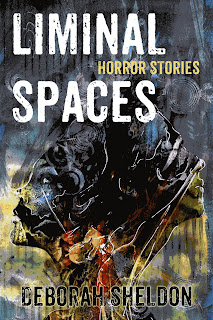
Deborah Sheldons new collection, Liminal Spaces, is now available, and Ive interviewed her to the mark the occasion. You can also read my five-star review on Goodreads.

Thanks for agreeing to be interviewed, Deborah. The most important question first of all - what’s your favourite writing snack or drink?

While writing, I favour sparkling chardonnay pinot noir. While editing, black unsweetened tea. Oh yes, I’m a fan of Hemingway, all right – in more ways than one.


How do you celebrate when you finish your book?

My husband and son took me out to dinner when I finished my collection Liminal Spaces: Horror Stories. Every time I finish a book, my celebrations centre around food. If not at a restaurant, then at home with a special meal such as lobster bisque, or a treat like a layered cake with fancy piped icing. Actually, I celebrate every event with food. Christmas, Easter, birthdays, anniversaries, graduations, career successes, whatever – you’ll find me in the kitchen trying to whip up something tasty to mark the occasion.

What is your kryptonite as a writer?

Boredom. Over the 36 years of my professional career, I’ve found that feeling “safe” is the fastest way to kill my enthusiasm. I need the anxiety of the unfamiliar. How thrilling to face down a new writing medium and have no idea if I’m capable of doing it! Uncertainty and challenge seem to jump-start my creative brain.

What risks have you taken with your writing that have paid off?

All of them. Back in 1986, while at university, I began my career as a feature writer for magazines. Then I moved to TV script-writing. After that, to medical writing and non-fiction books. Followed by fiction and horror writing. And now I’m dipping my toe into the untested waters of poetry. It’s like refreshing myself as a writer every time I experiment with a new medium. Whether or not the risk pays off professionally doesn’t negate the personal benefit.

When was the last time you Googled yourself and what did you find?

The last time I Googled myself I found a book review, and promptly shared it on social media, my website, and newsletter. Actually, I Google myself every month or so. I cultivated this habit when I stumbled across a book review some two years after it had been published! Which, yeah, felt way too late.

Are you active on social media? How do you use it?

I’m on social media, yes, but not in a participatory sense. For example, someone else runs my Facebook author page, and while I’m a member of Goodreads I don’t belong to any groups or interact in any significant way. I’m in poor health, so fatigue and chronic pain force me to be miserly with how I spend my time. While I’d love to muck in with horror writers on Facebook, Goodreads and other sites, and network and attend conferences and so on, the reality is I don’t have the physical capacity. My concern is that people in the industry might dismiss me as snobby or standoffish, but the truth is, I’m unwell.

What’s the trickiest thing about writing characters of the opposite gender?

My whole life long, I’ve believed that humans are essentially the same regardless of sex, race, religion or era. A person from 3000 years ago would understand my fears, joys and concerns as if I were their contemporary. I must admit, however, that I’ve never been a “girly” girl. I don’t wear earrings, eyeshadow or perfume, have no interest in fashion, own three pairs of shoes and one handbag, and I’m typing this interview wearing an old t-shirt and my husband’s tracksuit pants. Perhaps my lack of interest in stereotypical “feminine” pursuits helps me write male characters that feel authentic.

Have pets ever gotten in the way of your writing?

On the contrary! For the past decade, I’ve had a budgerigar in my study to keep me company while I write. Our first budgie was Atlas and now we have Zeus, who is gutsing seeds and watermelon even as I type. I’ve got into the habit of discussing my writing issues with our birds. Often, I read out my drafts. Zeus is an attentive listener. His feedback includes wise nods, whistles, chattering, and occasional flurries of cursing that he’s picked up from me. (Fun fact: Zeus inspired one of my best-loved characters, the police dog in Thylacines.)

Animals – particularly birds – play an important and generally terrifying role in your fiction. Why?

I wrote the stories in Liminal Spaces over the years 2017 to 2021, sprinkled between longer-form projects including my bio-horror novella Thylacines, zombie novel Body Farm Z, bigfoot novella Man-Beast, and the anthologies Midnight Echo 14 and Spawn: Weird Horror Tales About Pregnancy, Birth and Babies. It wasn’t until I was compiling the collection and laying out my TOC that I noticed – with surprise – how many of my stories involved birds! No, this wasn’t a deliberate symbolic device. I honestly did not realise. Some people call themselves dog- or cat-people, and I guess I’m a bird-person. Birds have a fascinating duality about them. Beautiful, friendly and playful Australian varieties like budgerigars and lorikeets can remind you of their dinosaur genes every time you look at their claws and the scaly rings about their eyes.

Your fiction is rich in Australian lingo and traits, and that’s bloody awesome! Is this a conscious decision or just natural for you?

Yes, it’s very much a conscious decision. What I’ve always admired about storytellers from the United States – across prose fiction to films to TV – is their love of writing US-centric stories filled with US locations, characters and language. So, I’m a flag-waver for Australian locations, characters and language. Not for me the generic “set anywhere” type of story. I don’t like that as a reader, and I won’t do it as a writer. That’s why my first anthology with IFWG was open to submissions only from Australian citizens, residents and ex-pats – and why my second anthology (with the same press) will do the same. One’s culture deserves to be celebrated: I’m not a fan of “cultural cringe”. 

Thanks, Deborah. 

You can buy a copy of Liminal Spaces on Amazon or through IFWG Australia


***

Deborah Sheldon is an award-winning author from Melbourne, Australia. She writes short stories, novellas and novels across the darker spectrum of horror, crime and noir. Her award-nominated titles include the novels Body Farm Z, Contrition and Devil Dragon; the novella Thylacines; and the collection Figments and Fragments: Dark Stories.

Her collection Perfect Little Stitches and Other Stories won the Australian Shadows ‘Best Collected Work’ Award, was shortlisted for an Aurealis Award and longlisted for a Bram Stoker. Deb’s short fiction has appeared in many well-respected magazines such as Aurealis, Midnight Echo, Andromeda Spaceways, and Dimension6. Her fiction has also been shortlisted for numerous Australian Shadows Awards and Aurealis Awards, and included in various ‘best of’ anthologies such as Year's Best Hardcore Horror.

As editor of the 2019 edition of Midnight Echo, Deb won the Australian Shadows ‘Best Edited Work’ Award. Her anthology Spawn: Weird Horror Tales About Pregnancy, Birth and Babies was a flagship 2021 title for IFWG Publishing Australia.

Deb’s other credits include TV scripts such as NEIGHBOURS, feature articles for magazines, non-fiction books (Reed Books, Random House), stage plays, and award-winning medical writing. Visit her at http://deborahsheldon.wordpress.com

DEB’S AMAZON AUTHOR PAGE https://www.amazon.com/~/e/B0035MWQ98


Monday, 3 January 2022

Among the Headstones - Interview with Pamela Turner

I’ve interviewed fellow contributor to Among the Headstones: Creepy Tales from the Graveyard, Pamela Turner, as part of the preparations for the release of the anthology early next year. Full details about the haunting anthology are provided at the end of the interview.

#

How do you feel about cemeteries? Do find them creepy?

When I was growing up in my hometown, I believed the local cemetery was haunted. No one had told me it was. I believed it because I read horror anthologies in elementary school, and it fed my imagination. I remember thinking how scary it must be for those living near the cemetery, especially after dark. Now cemeteries are some of my favorite places to visit. I like learning about the different symbols, looking at the statues, and even discovering a unique headstone.

How would you like to be buried?

Since my husband was a veteran, I will probably be buried with him in the veterans’ cemetery. On Veterans Day this year, I met a veteran who told me that when a spouse dies and is buried with the veteran, his or her information is engraved on the other side of the veteran’s headstone. Next time I go to the cemetery, I’m going to look for this.

What scared you when you were a child?

Dolls. Believing my dolls would steal my soul, I made them face the wall before I went to bed. And one was a Raggedy Ann doll. At the time, I didn’t know about the infamous Annabelle, which was probably a good thing. I’ve since read Algernon Blackwood’s short story and watched the Night Gallery episode.

What’s your favourite horror book? What do you like about it?

The Shining by Stephen King is my favorite horror novel. A family is trapped in a hotel during the winter with the father/caretaker slowly going mad and threatening his wife and son. But his wife fights back to save her family.

Who is your favourite Gothic author? Why?

Shirley Jackson is my favorite Gothic author. Her novel The Haunting of Hill House is, along with The Shining, one of the creepiest stories I’ve read. It impresses me how she made the house itself a character and a sinister one. Also, I’ll never forget the ending. What I’m curious about is what happened in Hill House to cause the haunting, although I don’t think that’s ever explained.

For readers who are new to your fiction, which of your books would be a good start?

My novella The Ripper’s Daughter, which takes place ten years after the Ripper’s murder spree. Prostitutes are showing up dead in Louisville, Kentucky, and a former detective inspector turned vampire/tavern owner fears Jack is responsible.

ABOUT PAMELA TURNER

Pamela Turner’s love for the paranormal began in elementary school, where she discovered anthologies filled with ghosts, witches, vampires, and other creatures that go bump in the night. Then there was Rod Serling’s Night Gallery and that creepy doll. Fearing her Raggedy Ann doll would steal her soul, Pamela made the doll face the wall before she went to bed.

Despite this, her interest in the supernatural continued. In middle school, she penned her own tales of terror. Fellow students enjoyed them, and she dreamed of becoming a published author.

After a short stint as a freelance magazine writer, she decided to return to writing fiction. She's also an award-winning screenplay writer.

Currently, she writes paranormal suspense featuring vampires, dragons, angels, and demons. Just don’t expect her angels to always be good or her demons to always be evil.

Many of her stories are set in Louisville, Kentucky where she lives with her daughter and herds three rescue cats. When not writing, she enjoys anime and manga, weaving, aviation, cemeteries, and abandoned buildings.

You can find her at https://pamturner.net

Facebook: https://www.facebook.com/PamelaTurnerAuthor

Instagram: https://www.instagram.com/pamturner97/

Twitter: https://twitter.com/pamelaturner


ABOUT THE BOOK

AMONG THE HEADSTONES: CREEPY TALES FROM THE GRAVEYARD

This anthology, edited by Rayne Hall, presents twenty-seven of the finest - and creepiest - graveyard tales with stories by established writers, classic authors and fresh voices.

Here you will find Gothic ghost stories by Robert Ellis, Lee Murray, Greg Chapman, Morgan Pryce, Rayne Hall, Guy de Maupassant, Myk Pilgrim, Zachary Ashford, Amelia Edwards, Nina Wibowo, Krystal Garrett, Tylluan Penry, Ambrose Bierce, Cinderella Lo, Nikki Tait, Arthur Conan Doyle, Priscilla Bettis, Kyla Ward, Edgar Allan Poe, Paul D Dail, Cameron Trost, Pamela Turner, William Meikle and Lord Dunsany who thrill with their eerie, macabre and sometimes quirky visions.

You'll visit graveyards in Britain, Indonesia, Russia, China, Italy, Bulgaria, Thailand, USA, Australia, South Africa and Japan, and you can marvel at the burial customs of other cultures.

Now let’s open the gate - can you hear it creak on its hinges? - and enter the realm of the dead. Listen to the wind rustling the yew, the grating of footsteps on gravel, the hoo-hoo-hoo of the collared dove. Run your fingers across the tombstones to feel their lichen-rough sandstone or smooth cool marble. Inhale the scents of decaying lilies and freshly dug earth.

But be careful. Someone may be watching your every movement... They may be right behind you.


Purchase Link: mybook.to/Headstones

The ebook is available for pre-order from Amazon at the special offer price of 99 cents until 31 January 2022. (After that date, the price will go up.) The paperback is already published.


Monday, 20 December 2021

Among the Headstones - Interview with Kyla Lee Ward

Ive interviewed fellow contributor to Among the Headstones: Creepy Tales from the Graveyard, Kyla Lee Ward, as part of the preparations for the release of the anthology early next year. Full details about the haunting anthology are provided at the end of the interview.

#

What are cemeteries like in the country where you live?

The main things that differentiate Australian cemeteries from those in Britain or other British colonies are the dangers of heatstroke and snakes. And spiders - really large spiders that live in holes. The cemetery of Rookwood covers 314 hectares and large tracts have gone quite wild. I know whereof I speak.

What gives you the creeps?

Let’s see – if it’s not graveyards, snakes, spiders, or nightfall, then it must be people. Not all people, but certainly some. What people can do to each other and the scars it leaves, sometimes in the very walls.

What do you like about the Gothic Fiction genre?

To me, the Gothic is about coming home. That’s one of its key tropes – the young outsider who enters the crumbling mansion, discovering its secrets and those of their own heritage. Think of Anne Rice’s The Witching Hour and Tanith Lee’s Dark Dance. Finding a place where you belong, even if it is stained with murder and full of ghosts and bats. Especially if it’s full of ghosts and bats, and people behaving very, very badly. That’s history - the present is just a tiny, shiny ticket booth at the entrance to that old pile. You can’t understand who you are until you enter.

What’s the scariest story you’ve written?

Oh goodness, how do I answer this? The two Stoker nominees, “And In Her Eyes The City Drowned” and “Should Fire Remember the Fuel?” must be considered officially good as well as officially scary. The former has been translated into Japanese, which may give it an edge – but that story of mine which has been most reprinted is a very short and wry piece titled “The Loquacious Cadaver”. It is also included in The Macabre Modern and Other Morbidities.

How do you go about research for the fiction you write?

I read a great deal of history, myth and legend, custom and tradition. Past endeavours have found me in the Special Collection of the Mitchell Library, teasing out a description of Memphis written by a Persian adventurer in the 12th century, from a book printed in the 19th century, in my extremely shaky French – now that I think about it, there had to be an easier way. But when you’re dealing with a place that still exists, there is no substitute for having visited it yourself. I have been privileged to travel and find that some places present me with stories on platters, while the memory of others may lurk for years in the back of my mind before the right tale presents itself.

Another fine method of research is visiting museums (always take a sketchbook and make notes about every photo you take) and engaging in historical re-enactments. I am a part of the medieval re-enactment movement in Australia, and I assure you, it is much easier to describe the sensation of moving in armour once you have done so.

What are you currently working on?

I am currently working on a dark fantasy novel and pulling together the material for my first full story collection. I have written substantial new work for this, including a novella concerning necromancy and the French revolution that makes extensive use of the Paris catacombs.

ABOUT THE AUTHOR

Kyla Lee Ward is a Sydney-based creative who works in many modes, that have garnered her Australian Shadows and Aurealis awards. She has placed in the Rhyslings and received Stoker and Ditmar nominations.Reviewers have accused her of being “gothic and esoteric”, “weird and exhilarating” and of “giving me a nightmare.” Her latest release is The Macabre Modern and Other Morbidities, her second collection of dark and fantastic poetry after 2011's The Land of Bad Dreams. Her novel Prismatic (co-authored with her partner as "Edwina Grey") won an Aurealis Award for Best Horror. 

Her short fiction has appeared in the likes of Weirdbook, Shadowed Realms, Gothic.net and in the anthologies Oz Is Burning and Gods, Memes and Monsters: a 21st century Bestiary. Her work on RPGs including Demon: the Fallen saw her appear as a guest at the inaugural Gencon Australia. An artist and actor as well as an author, her short film, 'Bad Reception', screened at the Third International Vampire Film Festival and she is a member of both the Deadhouse immersive theatre company and the Theatre of Blood, which have also produced her work. In addition, she programmed the horror stream for the 2010 Worldcon. A practicing occultist, she likes raptors, swordplay and the Hellfire Club. To see some very strange things, try http://www.kylaward.com


ABOUT THE BOOK

Among the Headstones: Creepy Tales from the Graveyard edited by Rayne Hall, presents twenty-seven of the finest - and creepiest - graveyard tales with stories by established writers, classic authors and fresh voices.

Here you'll find Gothic ghost stories by Robert Ellis, Lee Murray, Greg Chapman, Morgan Pryce, Rayne Hall, Guy de Maupassant, Myk Pilgrim, Zachary Ashford, Amelia Edwards, Nina Wibowo, Krystal Garrett, Tylluan Penry, Ambrose Bierce, Cinderella Lo, Nikki Tait, Arthur Conan Doyle, Priscilla Bettis, Kyla Ward, Edgar Allan Poe, Paul D Dail, Cameron Trost, Pamela Turner, William Meikle and Lord Dunsany who thrill with their eerie, macabre and sometimes quirky visions.

You'll visit graveyards in Britain, Indonesia, Russia, China, Italy, Bulgaria, Thailand, USA, Australia, South Africa and Japan, and you can marvel at the burial customs of other cultures.

Now let's open the gate - can you hear it creak on its hinges? - and enter the realm of the dead. Listen to the wind rustling the yew, the grating of footsteps on gravel, the hoo-hoo-hoo of the collared dove. Run your fingers across the tombstones to feel their lichen-rough sandstone or smooth cool marble. Inhale the scents of decaying lilies and freshly dug earth.

But be careful. Someone may be watching your every movement... They may be right behind you.


Purchase Link: mybook.to/Headstones 

The ebook is available for pre-order from Amazon at the special offer price of 99 cents until 31 January 2022. (After that date, the price will go up.) A paperback will follow.


Saturday, 18 December 2021

Among the Headstones - Interview with Priscilla Bettis

Among the Headstones: Creepy Tales from the Graveyard will be released early next year, and its my pleasure to share this interview with fellow contributor, Priscilla Bettis. Full details about the haunting anthology are provided at the end of the interview.

#


Hi Priscilla and thanks for agreeing to answer a few questions about your story and inpiration. How do you feel about cemeteries? Do find them creepy?

There’s a cemetery at the end of our road. It gets full sun and has a beautiful view of the Blue Ridge Mountains (I live in Virginia), so no, not creepy at all. On the other hand, if there was a dilapidated, Gothic-style house with a family graveyard in the back overrun with dead thorn bushes, then yes, that’d be very creepy!

Has a real-life cemetery, grave or headstone ever ended up in your stories?

One time, to feed my creativity, I explored a cemetery blindfolded. All my other senses were on high alert. I was able to pepper different stories and poems with my observations, how freshly turned soil smells, how a granite tombstone is devoid of warmth . . .

Have you ever seen a ghost? Tell us about the experience.

Does hearing a ghost count? I was home alone, snuggled up on the sofa and lost in a book. The door at the end of the hallway creaked open. We have a cat who nudges doors open, so I wasn’t frightened. Sure enough, the tick-tick of tiny claws on the wood floor grew closer. Then the sofa cushion next to me pulled away from my thigh as if the cushion had been depressed. I patted my lap, inviting the cat to sit. Then I remembered: our cat had died three days prior. I finally looked up from my book. No one was there.

What do you personally, as a reader, like about anthologies?

Anthologies are great, especially if they’re full of ghosts.:-) When I read an anthology, I always find a wonderful, new-to-me author.

As a writer, what are your literary influences?

Andy Davidson because of his poetic Southern Gothic prose. When I grow up, I want to be Andy Davidson. And Jo Kaplan for her atmospheric, contemporary Gothic settings. When I grow up, I want to be Jo Kaplan, too!

What are you currently working on?

I am working on the final touches of a Southern Gothic novelette, The Hay Bale. It will be released on the 10th of January, 2022. (I gave myself chills writing that creepy story!) I am also editing my literary horror novella, Dog Meat, which will be published by the fantastic folks at Potter’s Grove Press in 2022.

Thanks for your time, Priscilla. I'm looking forward to reading your tale.


ABOUT THE AUTHOR

Priscilla Bettis read her first horror story, The Exorcist, when she was a little kid. Priscilla snuck the grownup book from her parents’ den, and The Exorcist scared her silly. From that moment on, she was hooked on horror and all things deliciously off kilter. As an adult, Priscilla turned to engineering physics, a wonderful profession, but what she really wants to do is write . . . or die trying, probably at the hands of a vampiric wraith. Priscilla shares a home in the Blue Ridge foothills of Virginia (USA) with her two-legged and four-legged family members. 


Website: priscillabettisauthor.com

Amazon author page: https://www.amazon.com/Priscilla-Bettis/e/B08R97Z63M


ABOUT THE BOOK

Among the Headstones: Creepy Tales from the Graveyard edited by Rayne Hall, presents twenty-seven of the finest - and creepiest - graveyard tales with stories by established writers, classic authors and fresh voices.

Here you'll find Gothic ghost stories by Robert Ellis, Lee Murray, Greg Chapman, Morgan Pryce, Rayne Hall, Guy de Maupassant, Myk Pilgrim, Zachary Ashford, Amelia Edwards, Nina Wibowo, Krystal Garrett, Tylluan Penry, Ambrose Bierce, Cinderella Lo, Nikki Tait, Arthur Conan Doyle, Priscilla Bettis, Kyla Ward, Edgar Allan Poe, Paul D Dail, Cameron Trost, Pamela Turner, William Meikle and Lord Dunsany who thrill with their eerie, macabre and sometimes quirky visions.

You'll visit graveyards in Britain, Indonesia, Russia, China, Italy, Bulgaria, Thailand, USA, Australia, South Africa and Japan, and you can marvel at the burial customs of other cultures.

Now let's open the gate - can you hear it creak on its hinges? - and enter the realm of the dead. Listen to the wind rustling the yew, the grating of footsteps on gravel, the hoo-hoo-hoo of the collared dove. Run your fingers across the tombstones to feel their lichen-rough sandstone or smooth cool marble. Inhale the scents of decaying lilies and freshly dug earth.

But be careful. Someone may be watching your every movement... They may be right behind you.


Purchase Link: mybook.to/Headstones 

The ebook is available for pre-order from Amazon at the special offer price of 99 cents until 31 January 2022. (After that date, the price will go up.) A paperback will follow.


Friday, 15 October 2021

An Interview with Tabatha Wood

Tabatha Wood’s new collection, SEEDS, is about to sprout. I thoroughly enjoyed it (Goodreads review here, and please follow Tabatha and myself on Goodreads) and decided I’d invite her to answer a few questions to share with you, my dear readers.

First things first, Tabatha—do you have a favourite type of seed, whether for eating, planting, or feeding birds?

Kia Ora, Cameron, and thank you so much for inviting me to your blog. 

Since you’ve read the story “Bloom” in SEEDS, I expect you can guess which real ones are my favourite–sunflower seeds. Which, funnily enough, you can do all three with. But you must be careful, because if you eat the wrong kind, well, you might have to make some tough choices… 

Tell us three interesting facts about yourself.

1. I was born in Whitby, as featured in Bram Stoker’s DRACULA, on the Northeast coast of England and I’ve always been drawn to anything gothic. I moved to Aotearoa, New Zealand in 2017. 

2. I’ve been deaf since childhood and wear two hearing aids, which also means I can lipread accents with a good degree of accuracy. 

3. I genuinely believe in the power of manifestation, which is a technique I learned about from Octavia Butler. Whenever I start a new project, I spend some time thinking about and writing down what I want to achieve from it and reminding myself how much I believe in its success. It helps shut up the imposter syndrome gremlins a bit and gives me hope on the days when the words don’t flow as easily. 

A number of tales in SEEDS explore the issue of not fitting in or feeling at home in one’s skin. Why does this theme speak to you?

I’ve definitely always felt like an outsider, and it took a long time for me to find a peer group I felt like I really belonged in. Some of that is down to my deafness and the sense of isolation that a sensory disability can bring. Some of it is linked to being an immigrant, displaced 12,000 miles away from where I grew up. I also, within the past few years, discovered I have ADHD. I’ve tried on many “hats” over my lifetime trying to figure out which one fits me the best, but I think gaining a greater understanding of why my brain works the way it does has also leeched into my storytelling. The theme of not fitting in is such a powerful and personal one, and it’s so important to us as human beings to feel needed and secure, to find where we belong. Removing that safety net can feel quite terrifying. 

There’s a distinct Kiwi flavour to several of the stories in this collection which we see in setting and dialogue. Why should people read fiction from New Zealand?

Funnily enough, I wrote about this recently for The Spinoff, New Zealand’s biggest pop culture website. (Find it here https://thespinoff.co.nz/books/19-08-2021/what-you-need-right-now-is-a-nice-soothing-horror-story/) In this article I say that, “New Zealand horror offers a unique perspective that can’t be seen anywhere else in the world.” Our landscape, culture and history are entirely unique to our islands, and our geographical location brings with it both a sense of safety and separation. A lot of New Zealand horror focuses on themes of resilience and community in the face of disaster. It explores how the rugged landscape can be thrillingly beautiful yet also deadly and threatening. I think New Zealand horror can sometimes be a little quieter, more gothic, than its American or European counterparts, but it is also extremely human, and I think it punches much harder emotionally because of that.    

What do you do outside of writing that helps the creative process?

To beat any writer’s block, I always find it best to get away from my desk and move my body. I like sea swimming, indoor rock climbing, long walks in the bush or by the sea. In my debut collection, DARK WINDS OVER WELLINGTON, I found a lot of my stories were intrinsically linked to the ocean in some way, a reflection of the way I was feeling in my life at that time. SEEDS is more about putting down roots and growing. So yeah, my biggest inspiration is being in nature. It helps me turn off the part of my brain that’s being too loud so I can focus better on what’s important. 

What does your editing process look like? 

CUT TO /me, slumped over my desk into the wee small hours, swearing profusely at my laptop, mashing the delete button and drinking copious cups of coffee, hoping… just hoping… something good might come out of it all. 

But seriously, my most helpful editing tools have been the Read Aloud function in Word and ProWritingAid. Both help get me to a baseline where my work is basically *good* but I can also go over and improve even further. Also, letting a story sit awhile before editing is essential. I can easily get bogged down in tiny details and miss the bigger picture, so working on a piece with fresh eyes is always a good idea. 

What are you working on now?

At the end of this year, I will be self-publishing my third poetry collection TO WISH ON IMPOSSIBLE THINGS, so I’m still tinkering with that a little. One of my favourite bands, The Cure, inspired the title, and the collection is about moving to Aotearoa, New Zealand, my experiences as an immigrant, finding myself and making a new home. I’m also working on a couple of nonfiction pieces about aspects of the horror genre while planning a dystopian hope-punk SFF novel. 

Where can we find you online?

My website, where I post regular blog pieces, stories and articles can be found at https://tabathawood.com/ and you can follow me on Twitter at @Tabatha_Writes

Thanks, Tabatha!

Grab your copy of SEEDS here from the 16th of October.


Thursday, 16 April 2020

Mystery Writer Interviews

The Disappearance of Jeremy Meredith

shutterstock_81871768

‘The Disappearance of Jeremy Meredith’ started with a setting and an atmosphere in mind. The characters and plot elements were then created to fit. I wanted a story in which an unexpected visitor arrives at Oscar's house in the middle of a storm, involving a disappearance, a touch of romantic tension, and with the solution to it all hidden in a clifftop manor on the Breton coast. The idea of an overheard conversation with a verbal clue that later linked to a physical key required a lot more thought and fine-tuning. It had to be just right because this element is the means of making sure the reader is actively involved in the investigation and faces the same challenge as Oscar.

This was my answer to the question asked of every contributor to Flame Tree Publishing's anthology, Detective Thrillers: "What was the inspiration behind your story?" 

You can read the full interview here.